The short answer
Most homes should have HVAC maintenance once a year, or twice a year if you rely on both heating and cooling. A visit includes cleaning, electrical and refrigerant checks, safety tests, and a clear report of anything that needs repair. We price any extra work before we do it.
Regular HVAC maintenance keeps your furnace, air conditioner, or heat pump running the way it should. It catches small problems before they turn into breakdowns and gives you a clear picture of your system's condition. SureBreeze AC Repair Service handles maintenance visits for homeowners in Fremont, Newark, Union City, Milpitas, and nearby cities. A typical visit covers cleaning, testing, and a full inspection of both the heating and cooling sides of your system. Afterward, we explain what we found in plain terms. If something needs attention, we tell you what it is, why it matters, and what your options are before any work begins.
Signs Your System Is Due for Maintenance
Most systems do best with a checkup once a year. Homes that use both heating and cooling heavily often benefit from two visits: one in spring before cooling season and one in fall before heating season. Even if you're not sure when your system was last serviced, it usually gives you signals.
Fremont-area summers are dry and can get hot away from the Bay, and winters are mild and damp. Many homes run the AC hard for part of the year and the heat on cold mornings and evenings, so both sides of the system get real use and both need attention.
- Rooms that heat or cool unevenly, or take longer than they used to
- Weak airflow from the vents
- Higher energy bills even though you haven't changed how you use the system
- The system turns on and off in short, frequent cycles
- New noises, such as rattling, squealing, grinding, or banging at startup
- A burning or musty smell when the system runs (a brief dusty smell the first time the heat comes on each season is common)
- Water pooling near the indoor unit, or ice on the refrigerant lines
- More dust around the house than usual
- No record of service in the past year
What We Check During a Maintenance Visit
We look at the whole system, not just the thermostat and filter. The exact checklist depends on whether you have a gas furnace with central AC, a heat pump, or a ductless mini-split. A visit typically includes:
You get a written rundown of what we checked, what we cleaned or adjusted, and anything we recommend fixing or keeping an eye on.
- Thermostat operation and settings, including schedules
- Air filter condition and size; we replace the filter or show you which one to buy
- Blower motor, wheel, and belt (if your system has one) for wear and buildup
- Electrical connections, capacitors, and contactors, checking for loose or burned contacts
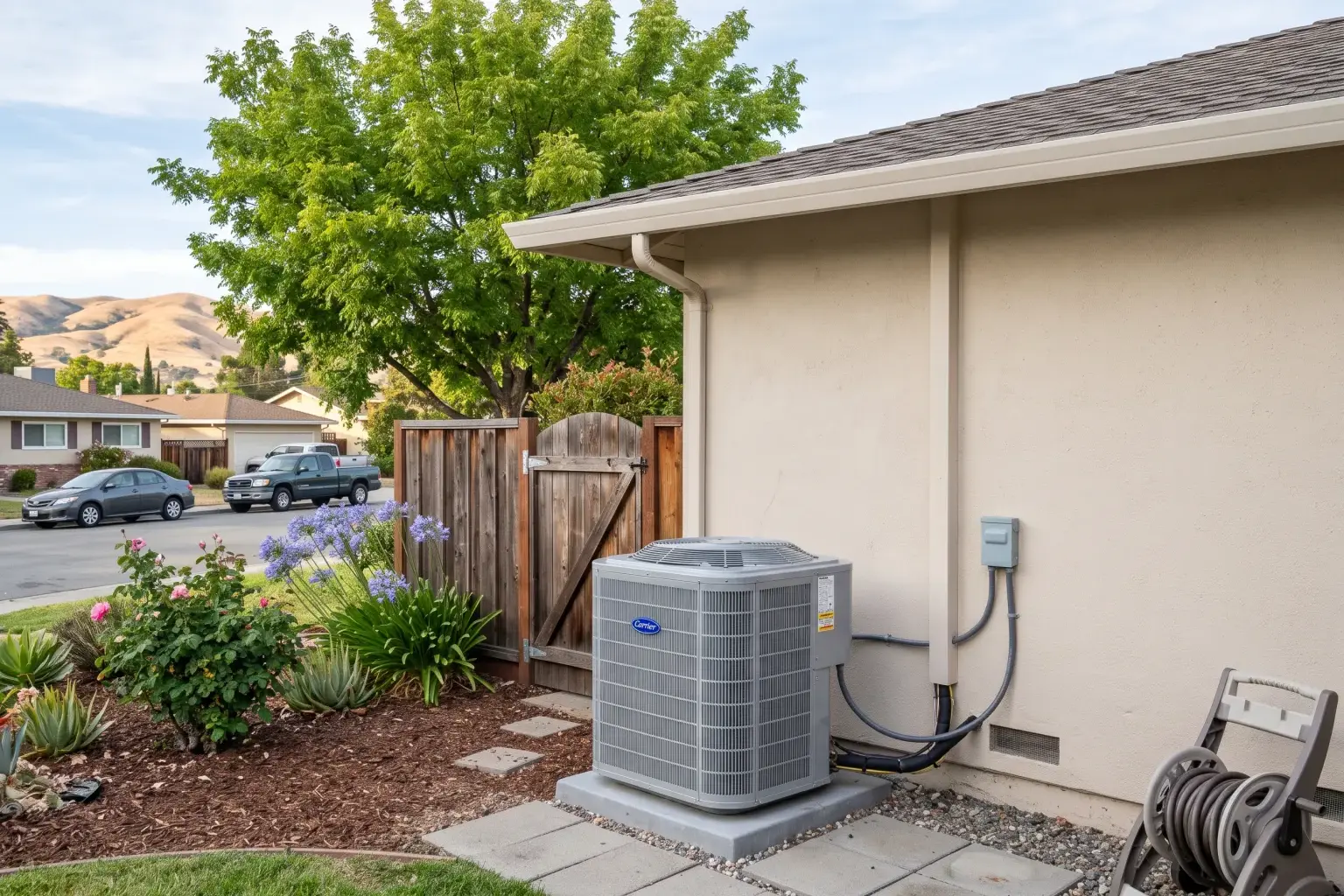
- Outdoor coil cleanliness and clearance around the unit
- Indoor evaporator coil, condensate drain line, and drain pan
- Refrigerant system performance, measured with gauges and temperature readings rather than guesswork
- Furnace burners, flame sensor, ignition, and a visual inspection of the heat exchanger
- Venting and flue connections, plus a carbon monoxide check around gas appliances
- Safety controls such as limit switches and the condensate overflow switch
- Supply and return air temperatures, to confirm the system heats and cools as designed
- Visible ductwork, checking for disconnected sections or obvious leaks
Repair or Replace: Understanding Your Options
Maintenance often turns up problems that are simple to fix on the spot, such as a weak capacitor, a clogged drain line, or a dirty flame sensor. Other findings call for a bigger decision, such as a leaking coil, a cracked heat exchanger, or a failing compressor. We lay out the options side by side so you can weigh them.
Repair usually makes sense when the system is otherwise in good shape, the part is available, and the problem is isolated. Replacement is worth considering in four situations: the equipment is near the end of its service life, it needs repeated major repairs, it struggles to keep the house comfortable, or it has a safety problem that can't be corrected.
If you're considering replacement, a few local rules are worth knowing. The Bay Area Air District's appliance rules don't require you to replace working equipment. They apply only when an existing furnace or water heater fails or is replaced. Under the Air District's furnace rule, natural gas furnaces manufactured from 2029 on must meet a zero-NOx emission standard. In practice, that points homeowners toward heat pumps for furnace replacements after that date. The zero-NOx date for small water heaters was set for 2027, but the Air District Board is considering amendments that could delay it. Check the current rule before planning a water heater replacement.
The federal tax credit for qualifying heat pumps applied only to equipment placed in service before December 31, 2025, so new installations no longer qualify. BayREN and your local clean energy provider may offer heat pump and electrification incentives, but amounts and availability change with each funding cycle. We confirm what's currently offered before we include it in a quote.
What Affects the Cost of Maintenance
We give you a quote before we start, and the price depends on your specific setup. The main factors are:
We explain and price anything outside the standard visit before doing it, and you decide whether to go ahead.
- The type of system: furnace and AC, heat pump, ductless, or a combination
- How many units or zones your home has
- How long it has been since the last service, and how much cleaning is needed
- How easy the equipment is to reach in an attic, crawl space, closet, or on a roof
- Whether you need parts, filters, or refrigerant beyond the standard visit
- Any repairs you choose to approve after the inspection
How a Maintenance Visit Works
When you book, we ask about your equipment, any problems you've noticed, and where the indoor and outdoor units are. That way the technician arrives with the right filters and parts.
When the technician arrives, they'll ask you how the system has been running, then work through the inspection and cleaning. The system will be powered off for part of the visit. We'll need access to the thermostat, the indoor unit, the outdoor unit, and the electrical panel.
At the end, we walk you through what we found in plain terms, show you photos where they help, and answer your questions. If we recommend a repair, you'll get the details and a price before any work is done. Between visits, check your filter monthly, keep a couple of feet clear around the outdoor unit, and keep supply and return vents unblocked.