The short answer
If your furnace or heat pump blows cool air, cycles on and off constantly, makes new noises, or leaves some rooms cold, it likely needs repair. SureBreeze diagnoses the actual cause, explains your repair and replacement options with a quote before any work begins, and fixes common problems without pushing a new system.
When your furnace or heat pump stops keeping up on a cold, damp night, you want a clear answer about what's wrong and what it will take to fix it. SureBreeze AC Repair Service handles heating repair for homeowners in Fremont and nearby cities, including Newark, Union City, and Milpitas. We work on gas furnaces, heat pumps, and the thermostats, controls, and ductwork that connect them. This page covers the warning signs to watch for, what a technician checks during a visit, how we think about repair versus replacement, and what shapes the cost of a job.
Signs Your Heating System Needs Repair
Bay Area winters are mild compared with much of the country, so many heating systems sit idle for months and then get pushed hard during cold, wet stretches. That stop-and-start pattern is often when problems show up. Schedule service if you notice any of the following:
If you smell gas, leave the house right away and call your gas utility or 911 from outside before calling a repair company. A dusty smell on the first cold day of the season is usually dust burning off the heat exchanger, but it should fade within a few minutes.
- Warm air never arrives, or the system blows cool air after running for a while
- Some rooms stay cold while others heat normally
- The furnace or heat pump turns on and off in short, frequent cycles
- New noises such as banging at startup, squealing, grinding, or rattling
- A burning or electrical smell that doesn't go away, or any smell of gas
- The burner flame looks yellow or flickers instead of burning a steady blue
- Energy bills rise even though you haven't changed how you use the heat
- The thermostat display is blank or the system ignores its settings
- A heat pump stays iced over or runs nonstop without reaching the set temperature
What We Check During a Heating Repair Visit
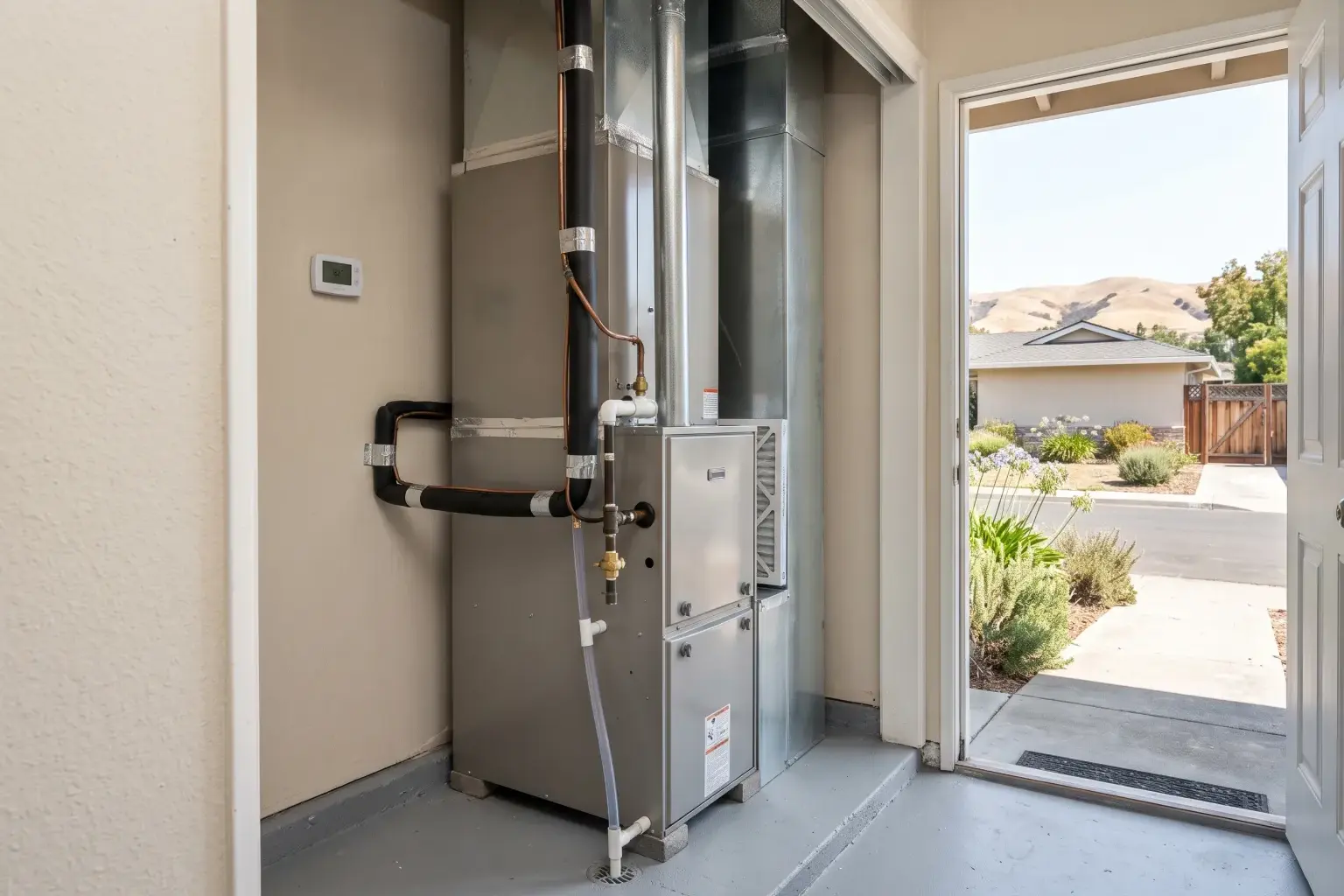
A good repair starts with finding the actual cause rather than swapping parts until something works. Our technician tests the system while it runs and inspects the parts most likely to fail. Depending on your equipment, that includes:
Once we find the problem, we explain it in plain terms, show you the failed part when we can, and lay out your options before any work begins. You decide what happens next.
- Thermostat settings, wiring, batteries, and calibration
- Air filter condition and airflow through supply and return vents
- Igniter, flame sensor, burners, and gas pressure on furnaces
- Heat exchanger and venting, including signs of cracks, rust, or blocked flues
- Blower motor, capacitor, belt, and blower wheel
- Limit switches, pressure switches, and control board error codes
- Refrigerant levels, reversing valve, defrost controls, and outdoor coil on heat pumps
- Visible ductwork for disconnected sections, crushed runs, or major leaks
- Carbon monoxide levels around the equipment
Repair or Replace? How We Help You Decide
Most heating problems are fixable. A failed igniter, dirty flame sensor, worn capacitor, or faulty thermostat is a routine repair, and we won't recommend a new system when a repair makes sense. Replacement becomes worth discussing when the equipment is near the end of its useful life, needs repeated repairs, has a cracked heat exchanger, or simply can't keep your home comfortable.
Local air rules are part of this decision. Under Bay Area Air District Rule 9-4, natural gas furnaces manufactured from 2029 on must meet a zero-NOx emission standard. In practice, that points many homeowners toward heat pumps when they replace a furnace after that date. The rule does not require you to replace working equipment; it applies only when an existing furnace fails or is replaced. If your furnace can be repaired safely, repairing it is still a reasonable choice.
If you're considering a heat pump, note that the federal Energy Efficient Home Improvement Credit covered qualifying heat pumps placed in service before December 31, 2025, so it isn't available for new installations now. Bay Area homeowners can still check BayREN and their local clean energy provider for current heat pump and electrification incentives. Those amounts and programs change by funding cycle, so we confirm the current offer before including it in any quote.
What Affects the Cost of a Heating Repair
We give you a clear quote before starting any work. Several factors shape what a repair involves:
Regular filter changes and seasonal maintenance tend to keep repairs smaller, because minor issues get caught before they wear out or damage other parts.
- The type of system: gas furnace, heat pump, or a dual-fuel setup
- Which part failed and whether it's a common component or a specialized one
- Parts availability, especially for older or less common brands
- Where the equipment sits, such as an attic, crawlspace, garage, or closet
- Whether the problem is isolated or has caused related damage
- Whether ductwork, venting, or electrical work is needed alongside the repair
- The time needed to track down intermittent problems that don't show up right away
How a Heating Repair Visit Works
Here's what to expect when you schedule heating repair with us:
Before we arrive, it helps to clear a path to the equipment and note when the problem started and what you've noticed. If your furnace has a blinking status light, a photo or short video of the pattern can speed up diagnosis.
- You contact us and describe the problem, including any noises, smells, or error codes you've seen.
- We schedule a visit and give you an arrival window.
- The technician talks with you about the symptoms, then inspects and tests the system.
- We explain the cause and your options, from repair to replacement, with a quote for each.
- With your approval, we complete the repair, in the same visit when the needed part is available.
- We run the system through a full heating cycle and confirm it's operating safely before we leave.
Heating Repair by city
- Heating Repair in Union City
- Heating Repair in Newark
- Heating Repair in Pleasanton
- Heating Repair in Hayward
- Heating Repair in Dublin
- Heating Repair in Milpitas
- Heating Repair in East Palo Alto
- Heating Repair in Menlo Park
- Heating Repair in San Ramon
- Heating Repair in Livermore
- Heating Repair in Sunnyvale
- Heating Repair in Mountain View